Art Program Revive
Background
When I stepped into my role as Lead Art Teacher in November 2025, the intro level class (called MIQ1) was struggling at a foundational level. As the entry art class for ages 4 to 7, it directly impacts whether students continue through the academy’s higher-level programs, so low performance here created a ripple effect across the entire pipeline.
I had already been working inside the program as a teaching assistant since October 2023, so I had firsthand visibility into what wasn’t working. Attendance was inconsistent, trial students were not converting, and both parents and students were openly dissatisfied with the experience.
Parents felt the work lacked value and took too long. Students were disengaged and often complained during class. The classroom itself felt empty, disorganized, and uninspiring.
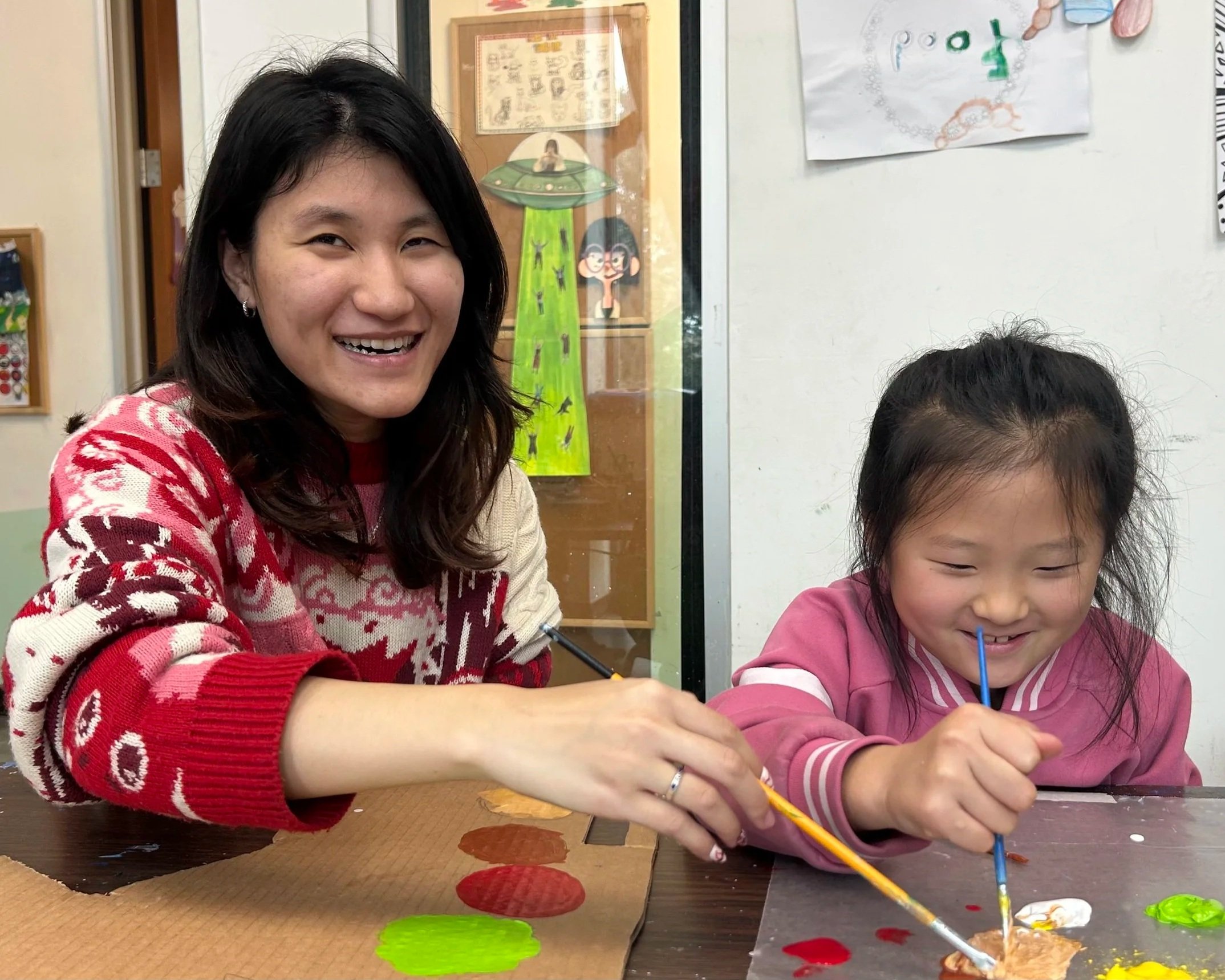
After being promoted, I took ownership of fixing the program. I worked closely with Mi Do on rebuilding the classroom and curriculum, and partnered with Isabelle Lin to better understand parent feedback and align improvements with marketing efforts.
The Challenges
No engaging classroom environment
The space felt plain and outdated, with minimal student work displayed and no sense of identity or energy
Inefficient classroom layout
Three tables were pushed together into one large surface, making it difficult to move between students and provide individual support
Disorganization and clutter
Materials had no defined system, supplies were scattered, and walkways were blocked with bags and belongings
Curriculum misalignment
Projects were large scale and took multiple weeks to complete, often using only colored pencils
Low student engagement
Students became frustrated and bored, leading to complaints, lack of focus, and poor retention
Parent dissatisfaction
Parents felt projects were repetitive, not worth displaying, and did not justify the time spent in class
Poor trial conversion
New students observing or trying the class often chose not to enroll due to the environment and experience
Team:
Kaylee Phernambucq (Lead Teacher + Marketing Assistant)
Mi Do (Teacher)
Isabelle Lin (Marketing Lead)
Strategic Response
I approached this as a full program redesign rather than incremental fixes. My goal was to create a system where the classroom environment, curriculum, and overall experience worked together to improve both retention and enrollment.
Every decision was grounded in direct feedback. I spoke with parents, students, and front desk staff to understand exactly why families were leaving and what they expected instead. At the same time, I worked with Isabelle to ensure that what we improved inside the classroom could also be communicated externally to drive new interest.
Strategy + Execution
1. Curriculum Redesign Based on Real Feedback
I removed the existing curriculum entirely and rebuilt it from scratch.
Through conversations with parents, I learned they wanted artwork that felt more polished and worth displaying, but still fun for their kids. Students told me they were tired of large projects and only using colored pencils.
I redesigned the structure around smaller, completed works. Each class now produces one finished piece using formats that are easier to manage and more satisfying to complete. This immediately changed how both students and parents perceived progress.
I also standardized the classroom experience so every student works on the same project. Instead of managing multiple projects at once, I introduced live demonstrations where students follow along step by step. This reduced confusion and kept the entire class engaged at the same pace.
My teaching approach focuses on simplifying advanced concepts. I introduced shading, composition, and realism techniques typically taught at much higher levels, but broke them down in a way that younger students could understand and enjoy. This became a major differentiator for the program.
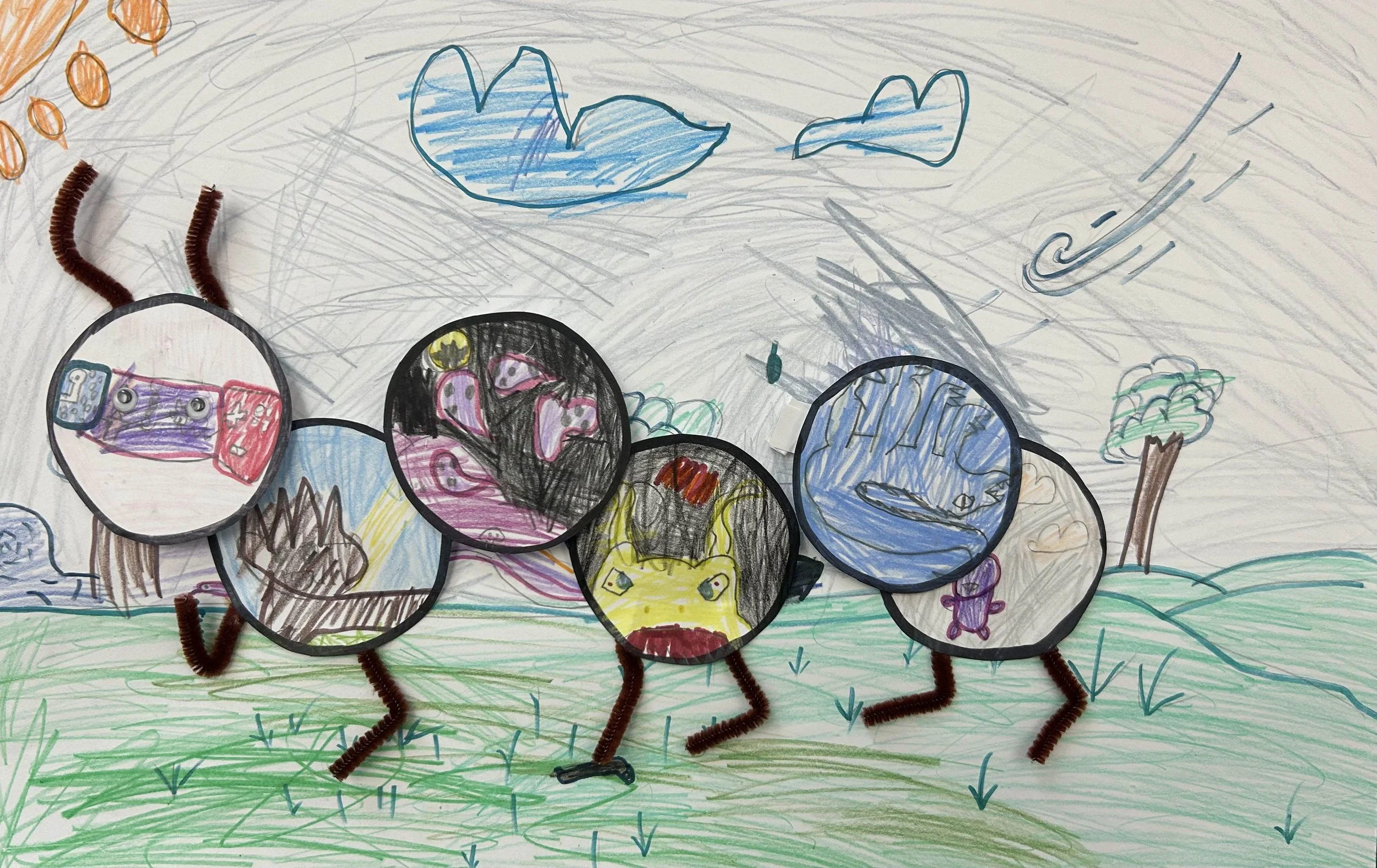
Projects Before:
11× 17 in, mostly colored pencil, took 3-4 classes
Main Complaints: Took too long to make, tiring for kids, messy/unprofessional looking
(age 5)
(age 7)
Projects After:
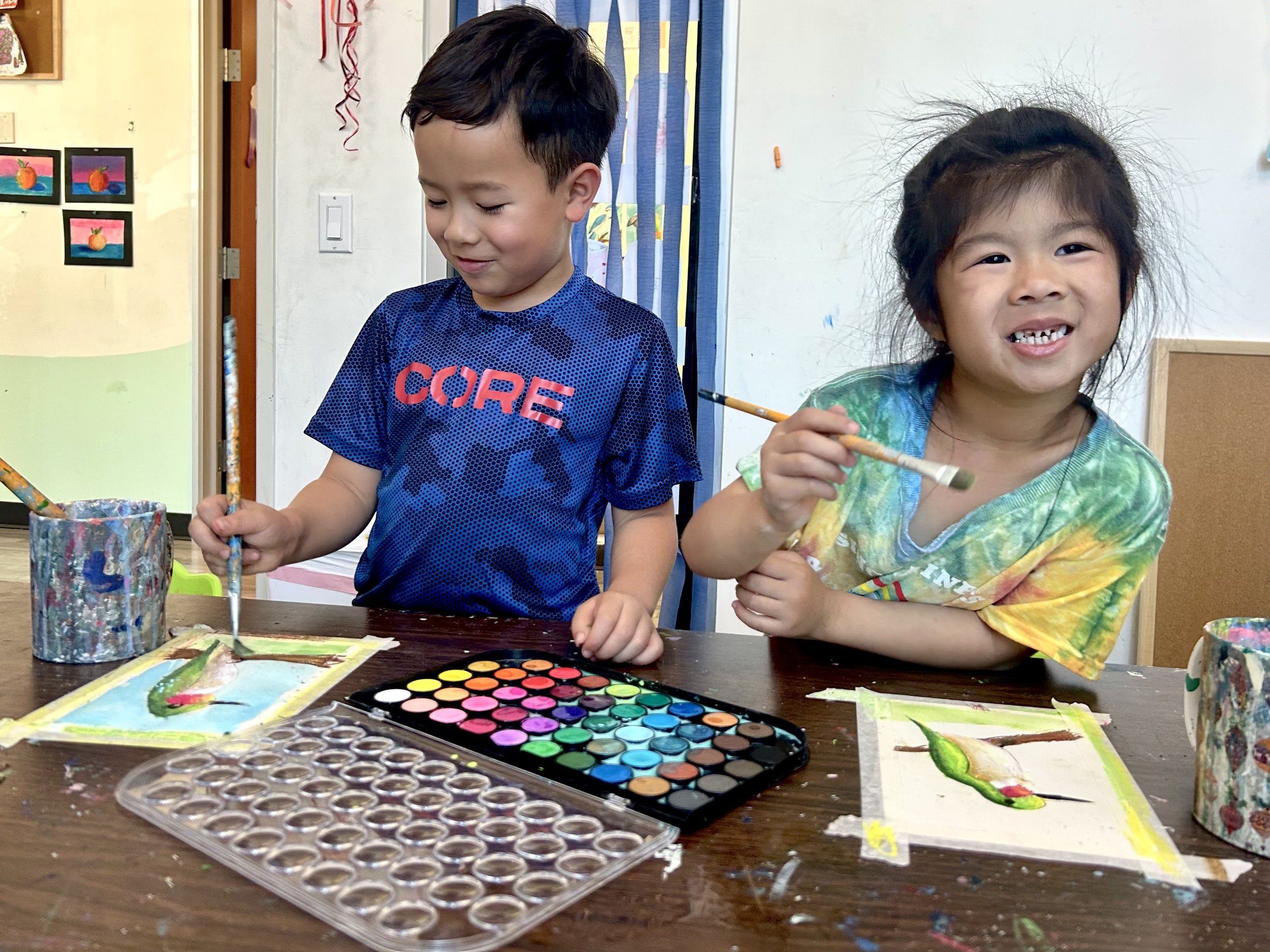
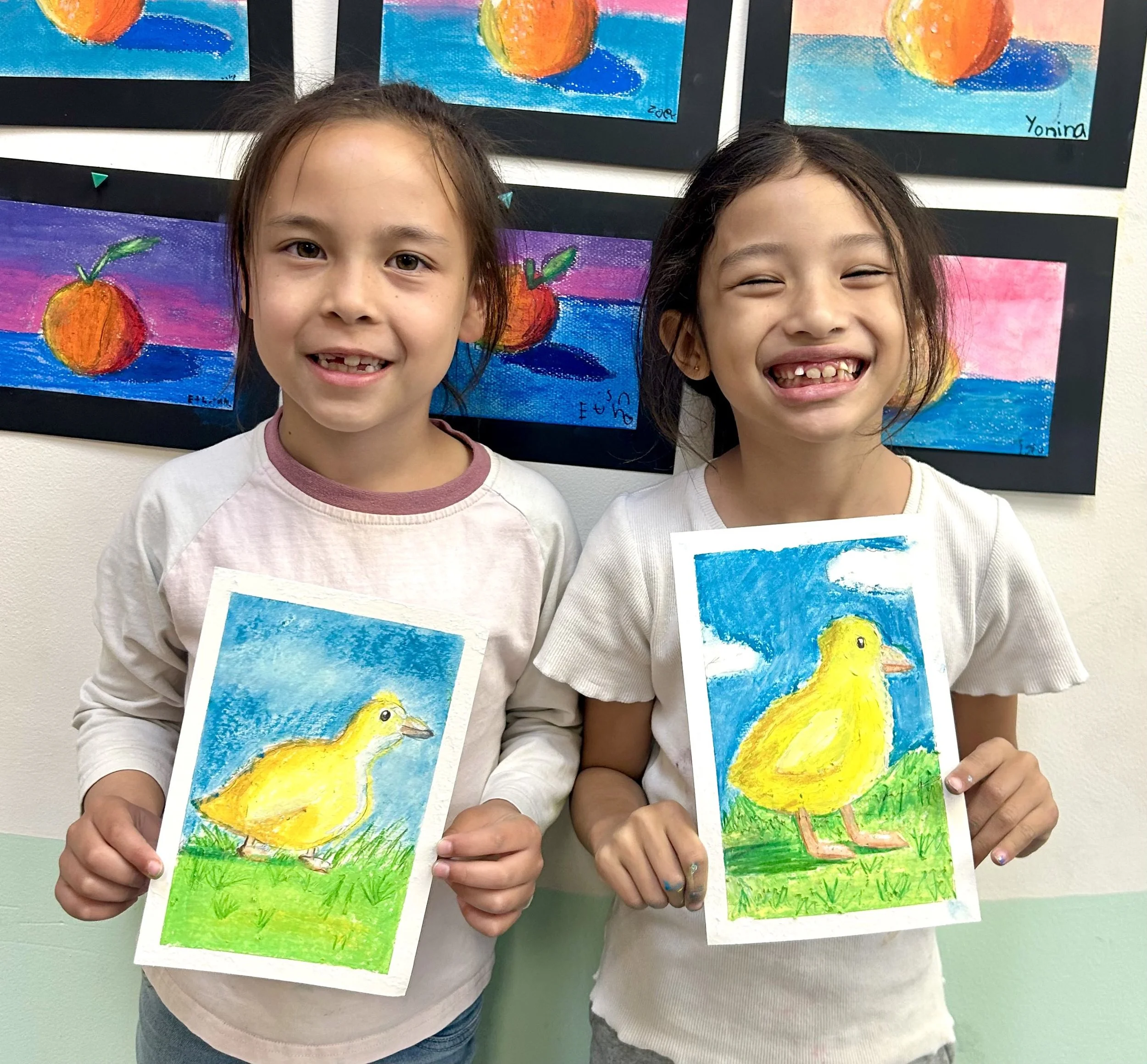
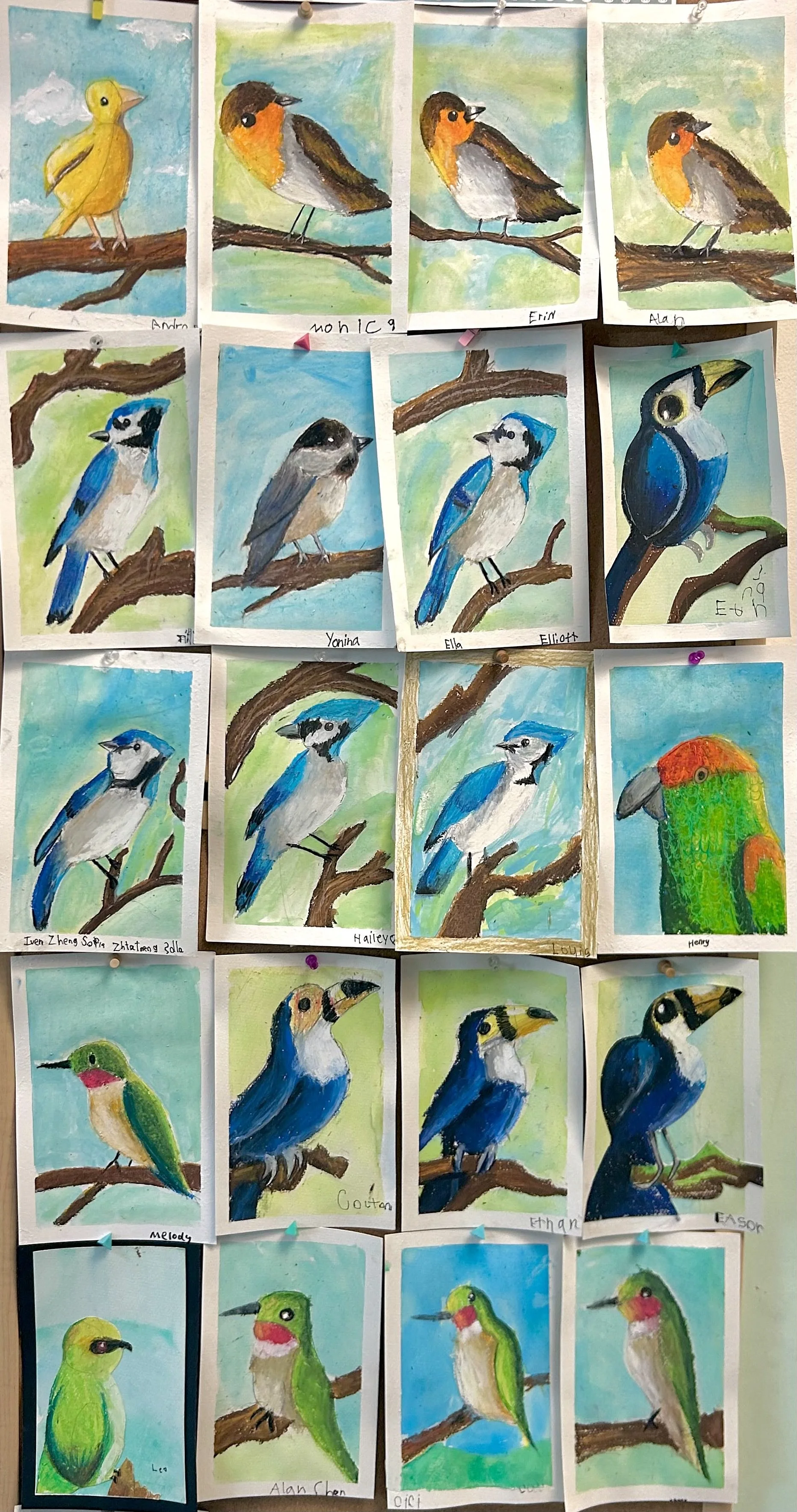
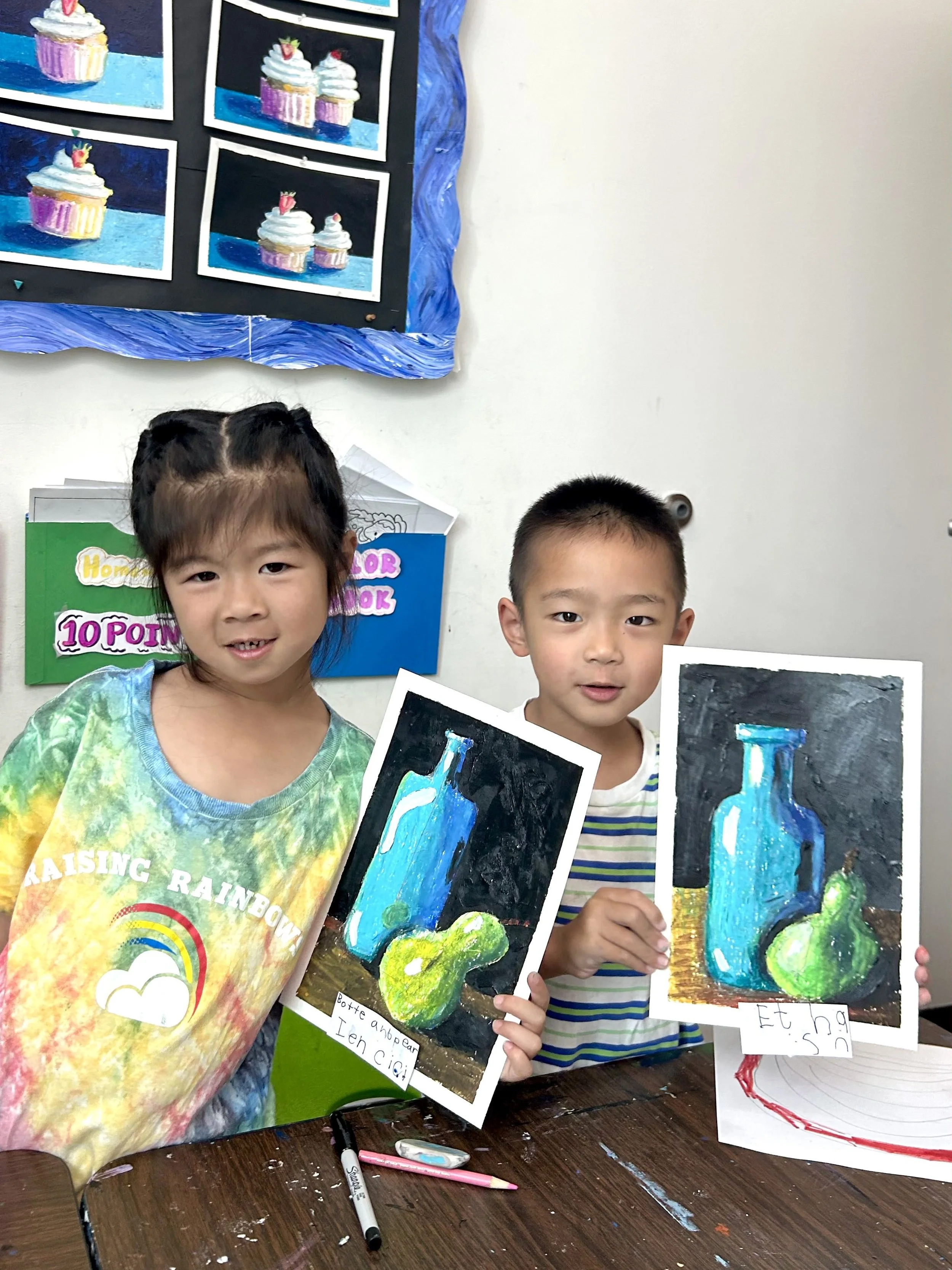
5×7 in, multiple materials, takes less than 1 class
Feedback: Parents/students enjoy taking a project home every class, looks advanced, less tiring
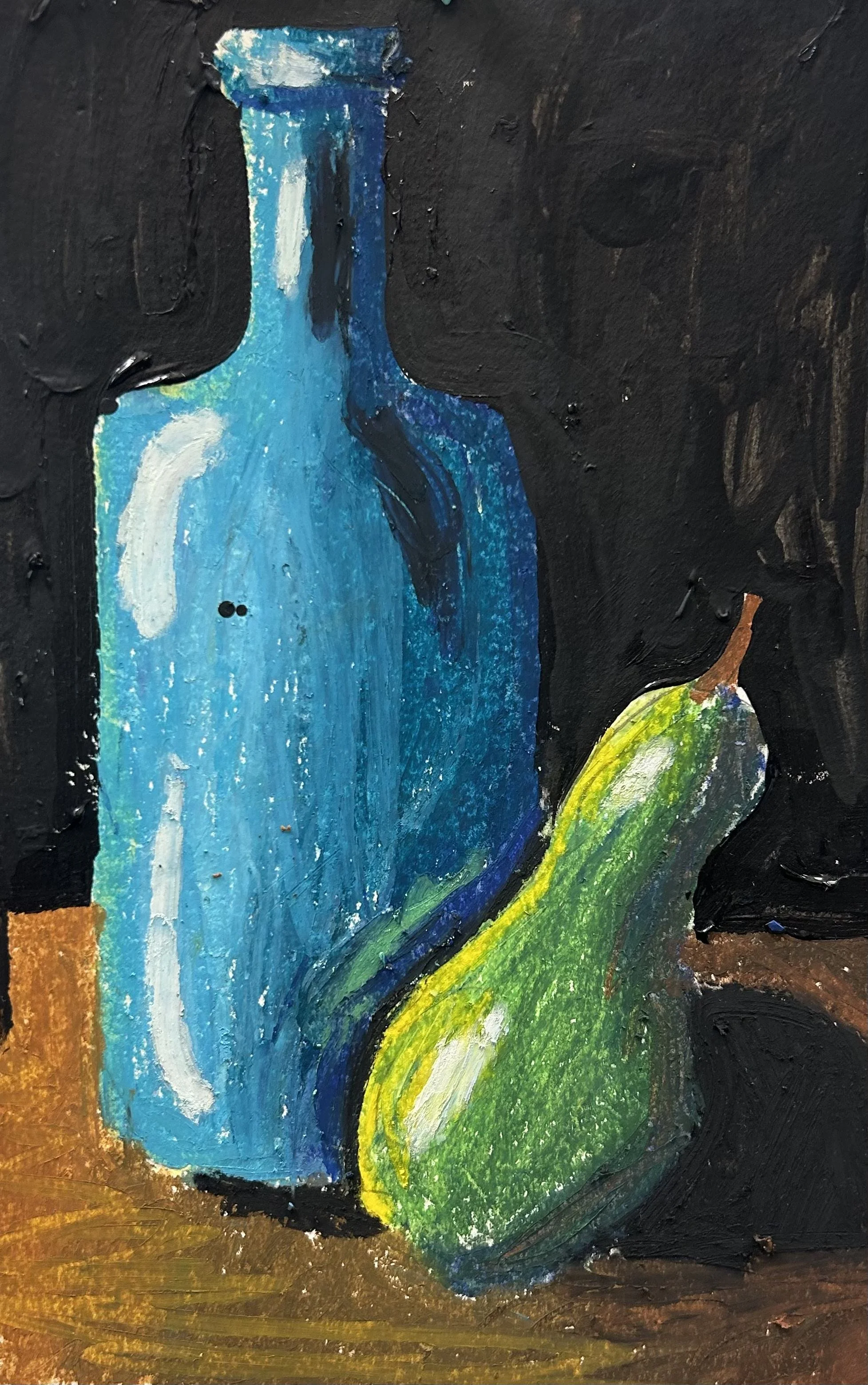


Iven (age 6)
Ethan (age 5)
Rebecca (age 7)
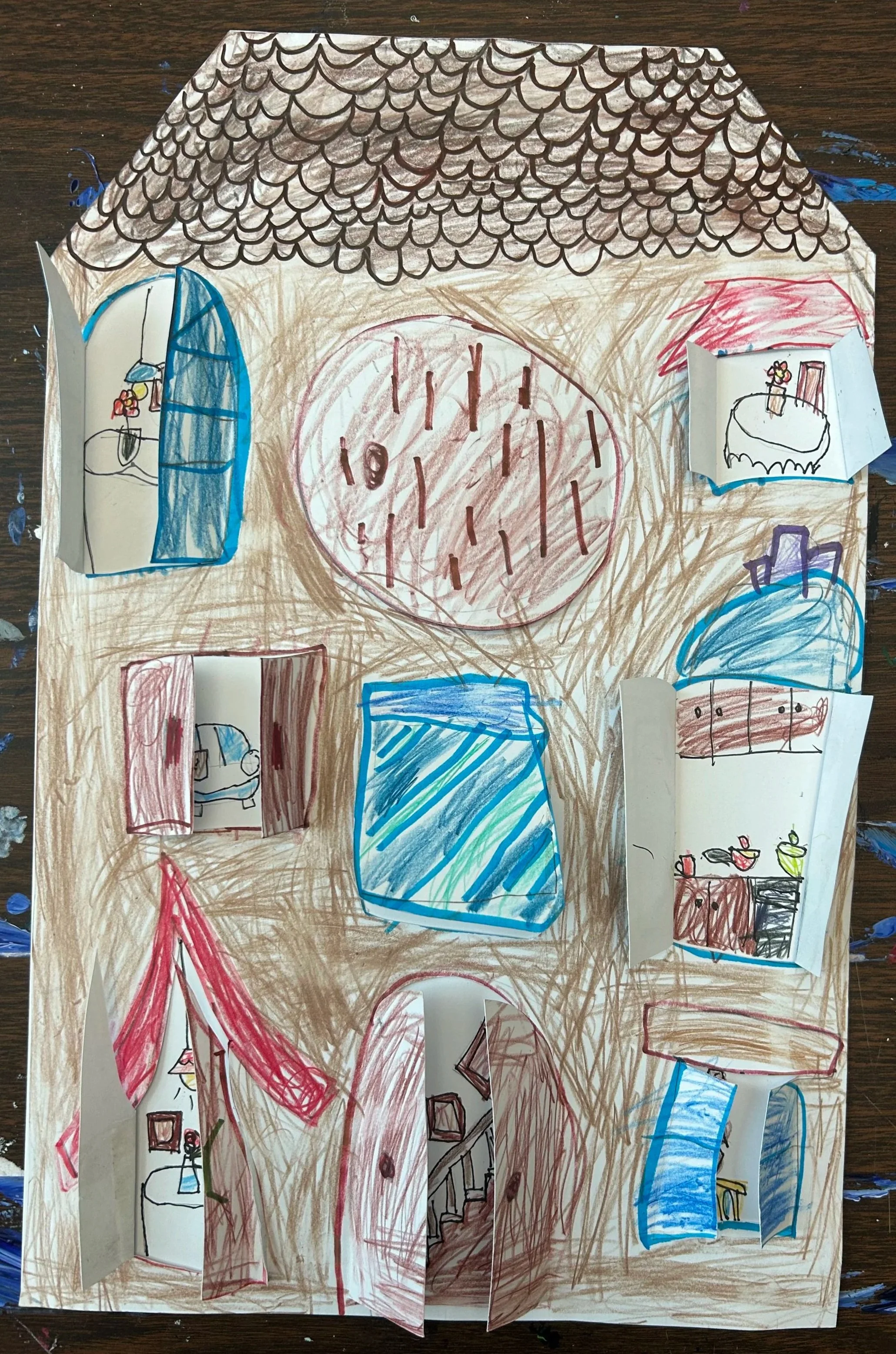
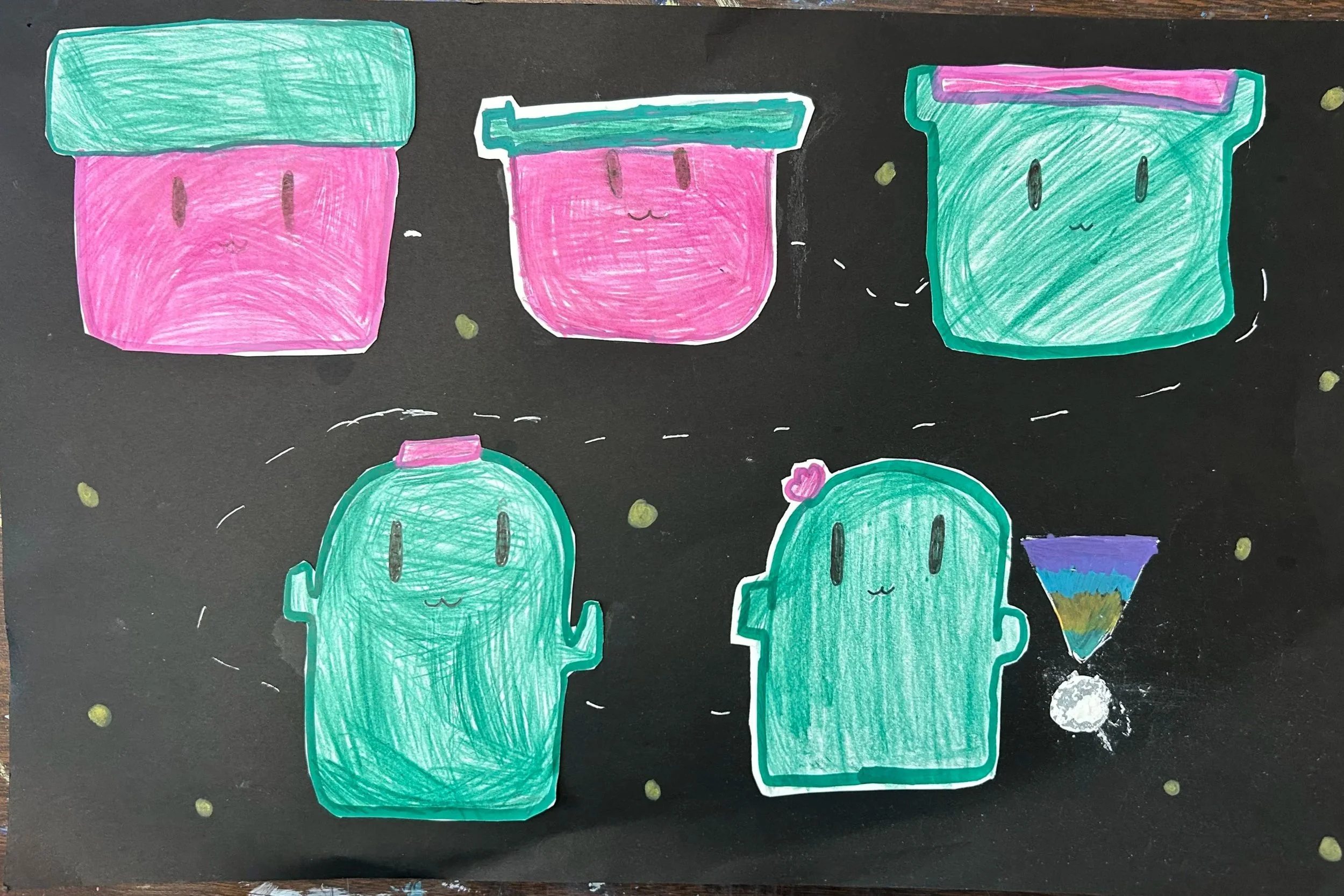
(age 6)


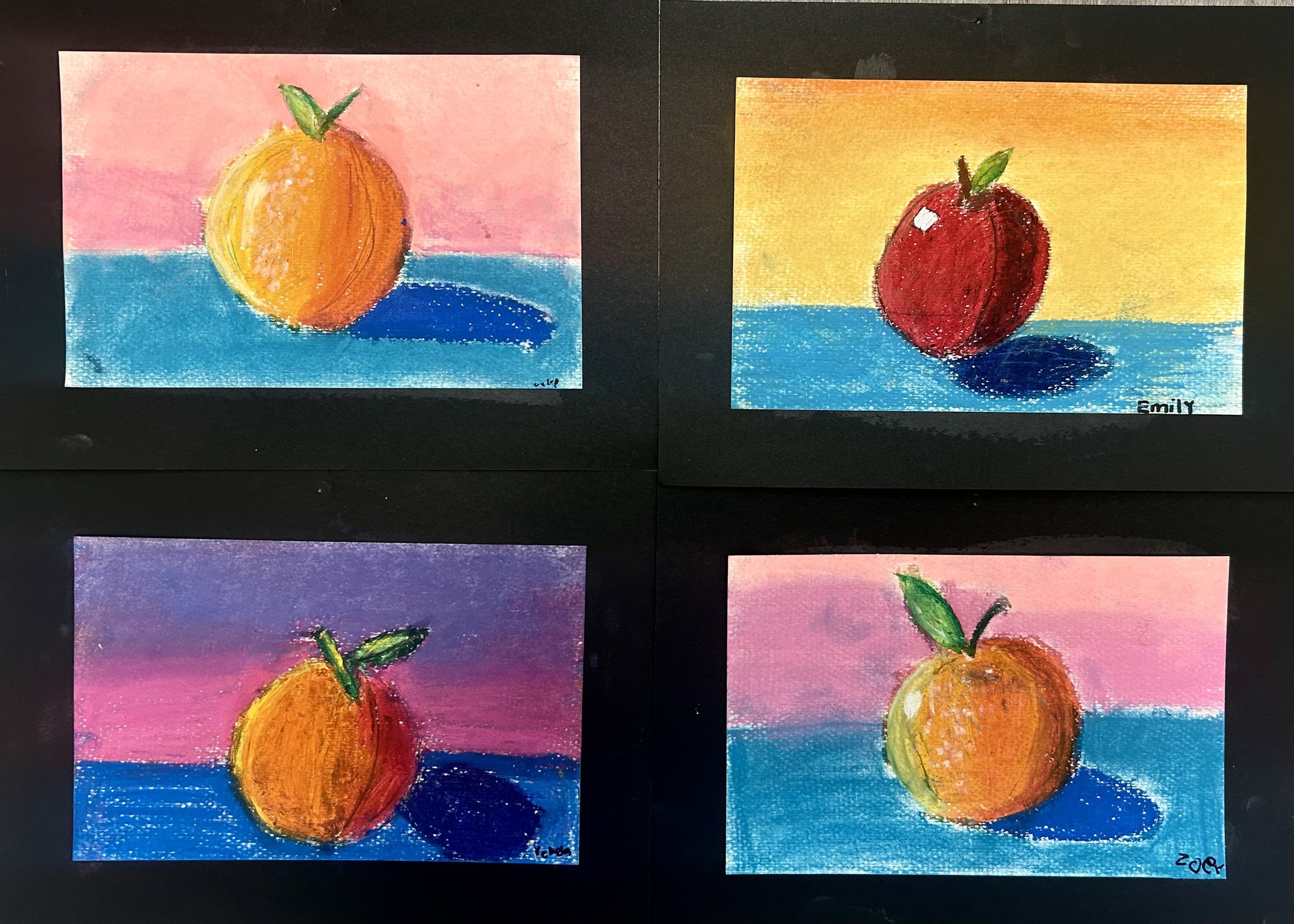
Various Students
(ages 5-7)
Rowan (age 7)
2. Classroom Redesign and Environment Transformation
I completely restructured the classroom layout to improve both functionality and experience.
Instead of one large table, I created a U shaped layout and placed a rolling chair in the center. This allowed me to move efficiently between students, provide individual help without disruption, and stay visually connected to the entire class.
I built organization systems using existing materials from storage. I repurposed shelves, created table attached storage, and added cubbies so students could manage their own materials. I also installed hooks to keep backpacks off the floor and maintain clear walkways.
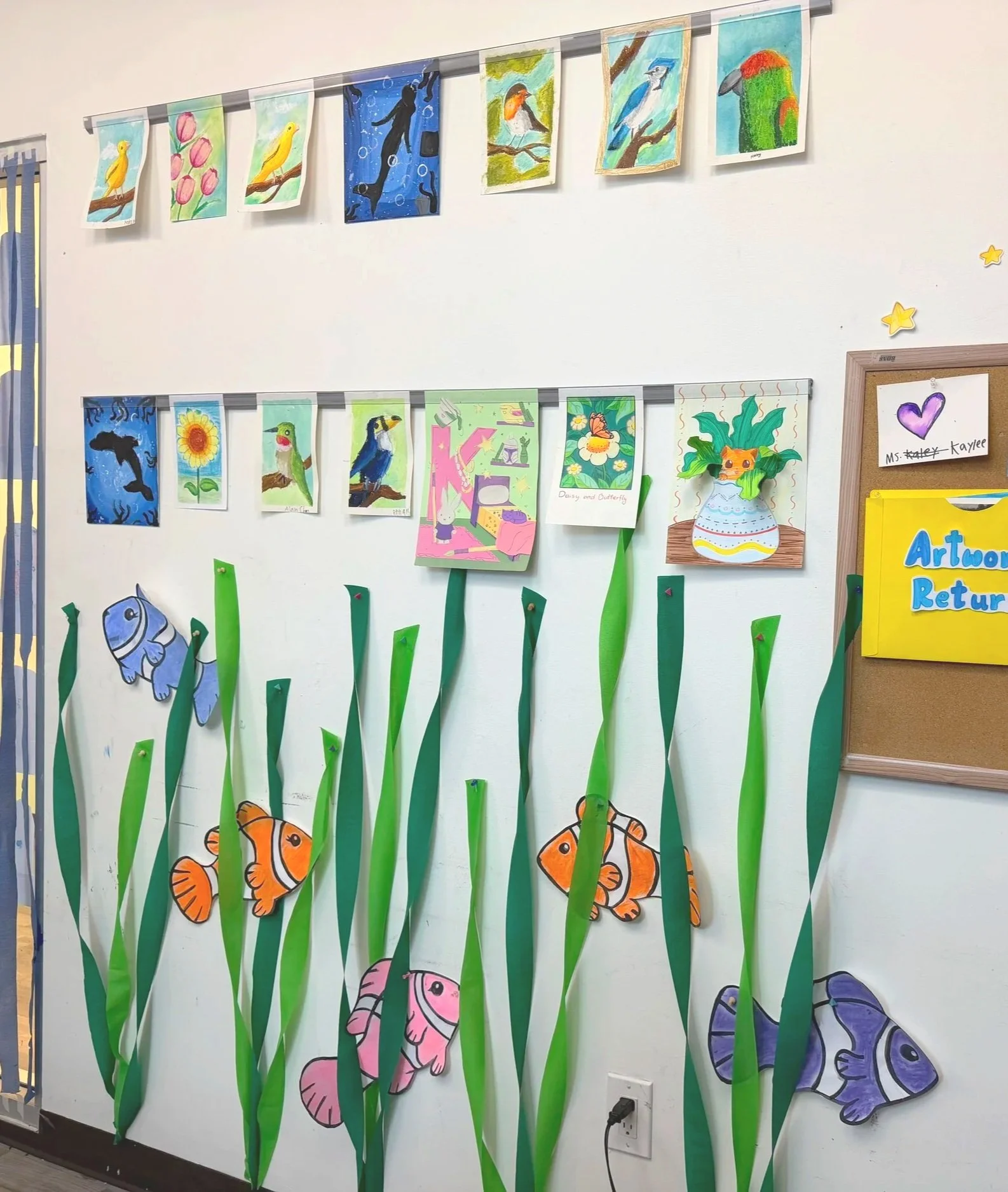
To address the lack of identity, I introduced a fully themed classroom. I had students vote on a concept, and we built an underwater environment together. I designed and installed large visual elements, including hand painted walls, ocean themed props, and lighting adjustments that gave the room a blue underwater tone.
Students contributed to the space by creating artwork that became part of the classroom itself. This created a sense of ownership and made the environment feel alive and constantly evolving.
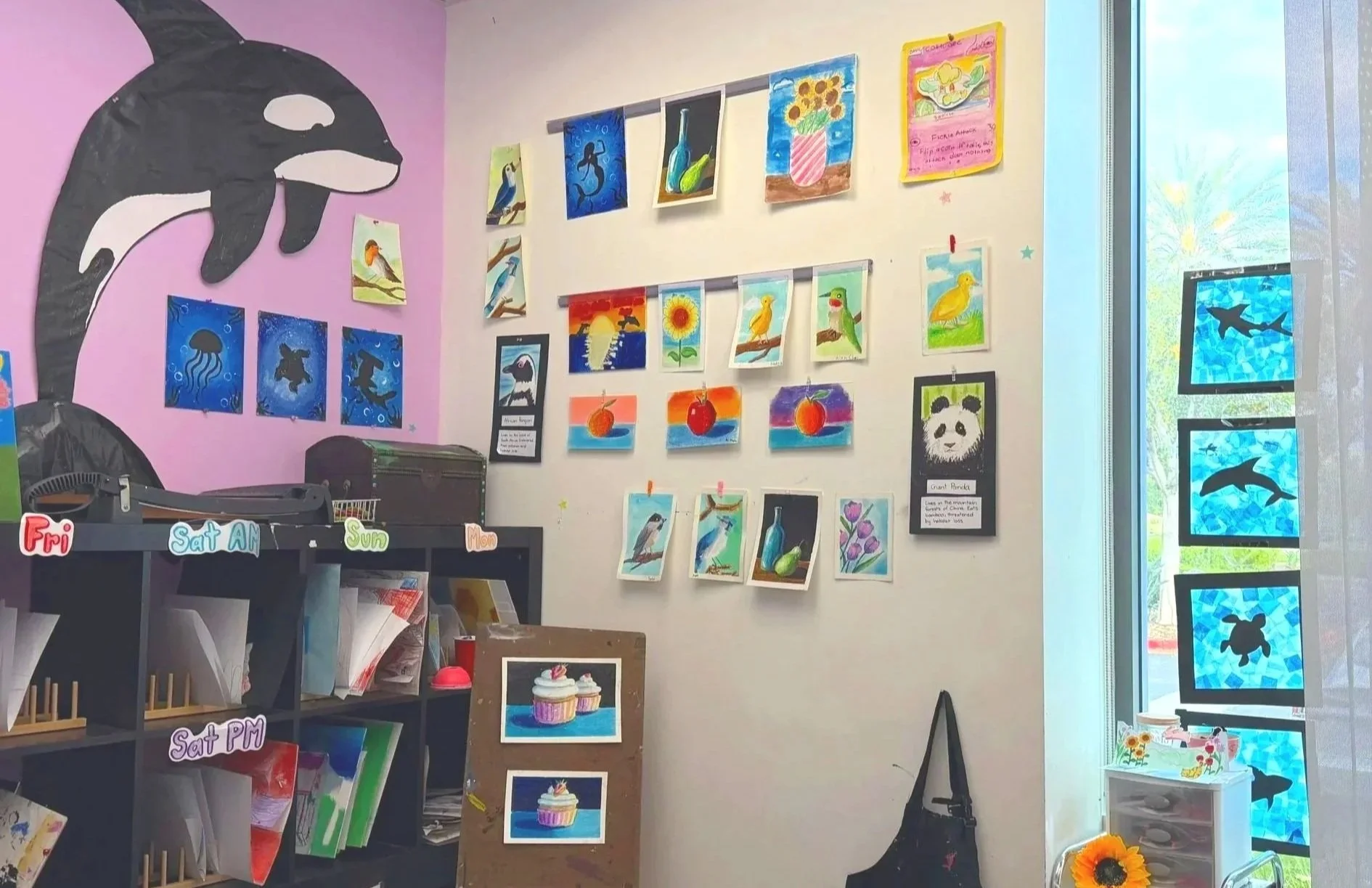
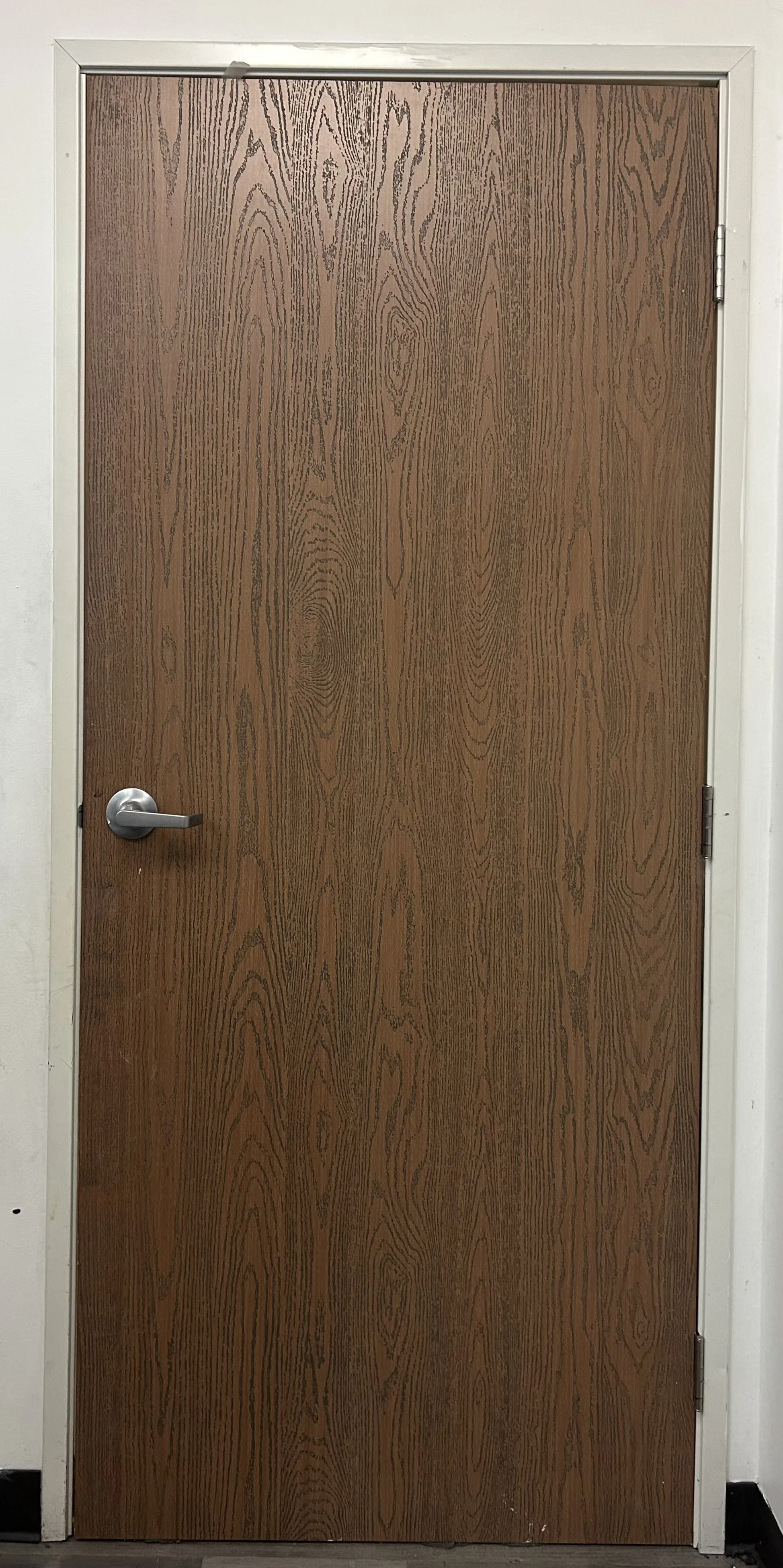
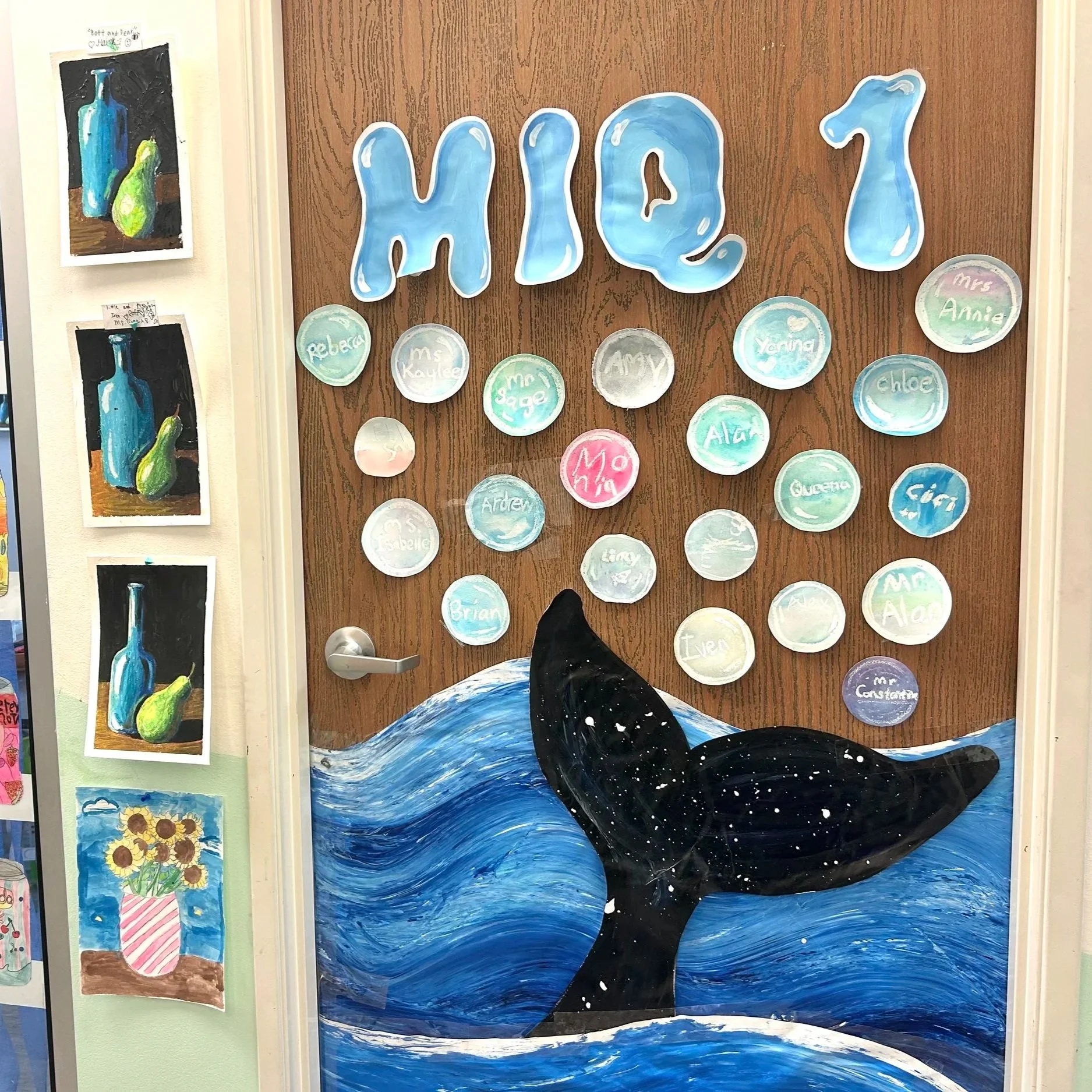
Door Before
Door After

3. Experience Design and Student Engagement
I restructured the class flow to better match student energy and attention.
The first portion of class is focused on a guided project, followed by a break, and then a creative exploration period where students can experiment freely with materials or continue their own ideas.
This balance allowed students to create high quality structured work while still having the freedom to explore. It also gave them something to look forward to each week.
I introduced a rotating showcase system where every student’s work is displayed on a large bulletin board. Each week, new work replaces the previous week’s, creating a consistent cycle of visibility and recognition.
Parents began to engage more with the class because they could see progress. Many started taking photos regularly, which reinforced the perceived value of the program.
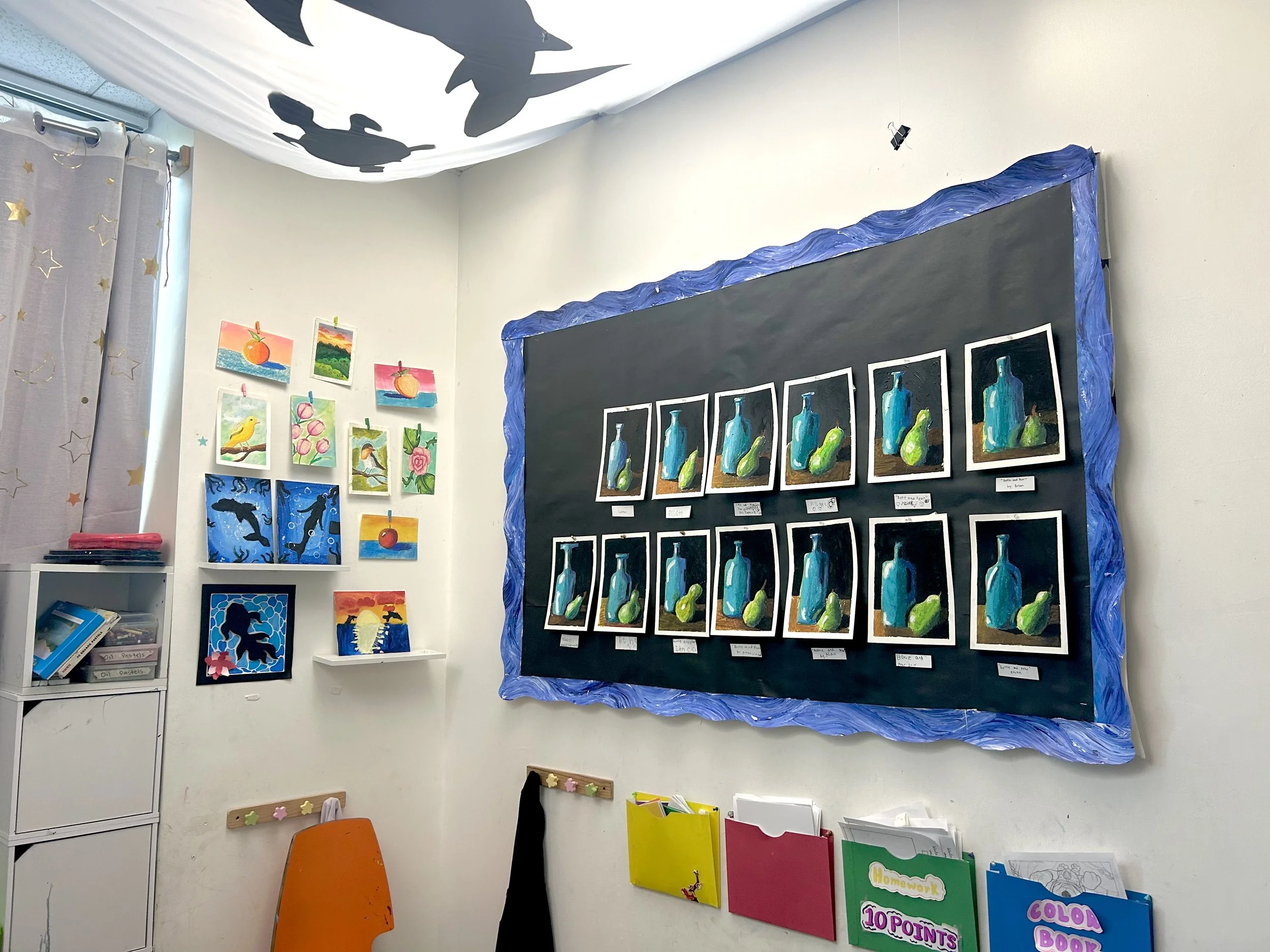
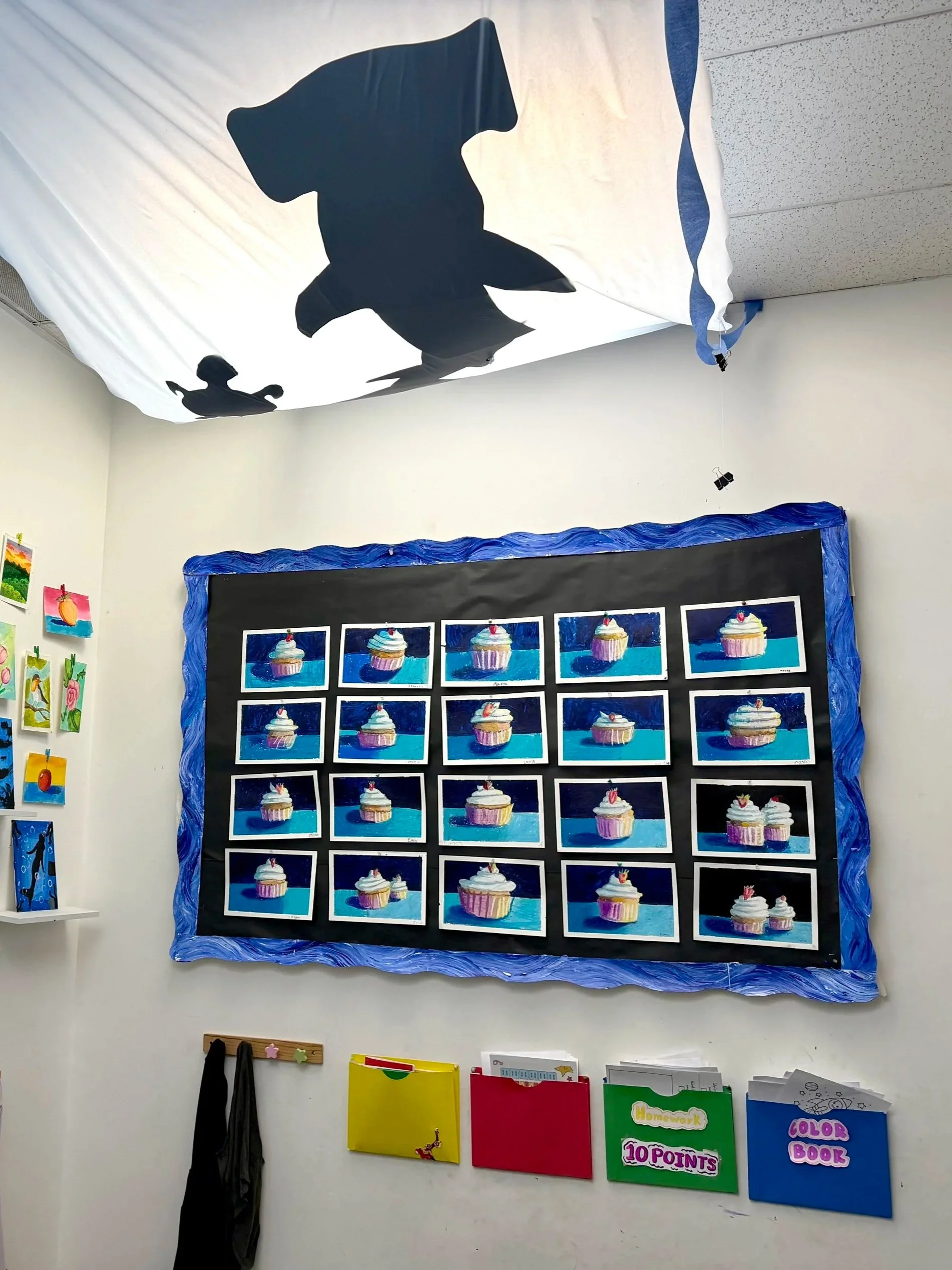
Rotating Art Showcase Board
4. Marketing Alignment and Feedback Loop
While I focused on the in-class experience, I worked with Isabelle Lin to connect those improvements to marketing.
We used updated visuals, student work, and classroom transformations to attract new interest. Marketing efforts helped increase trial volume, but the redesigned classroom experience is what converted those trials into long term enrollments.
We also maintained a continuous feedback loop with parents and staff to refine both the curriculum and the messaging.




Marketing Postcard (version 1 & 2)



Marketing Posters Used to
Promote MIQ1 Class
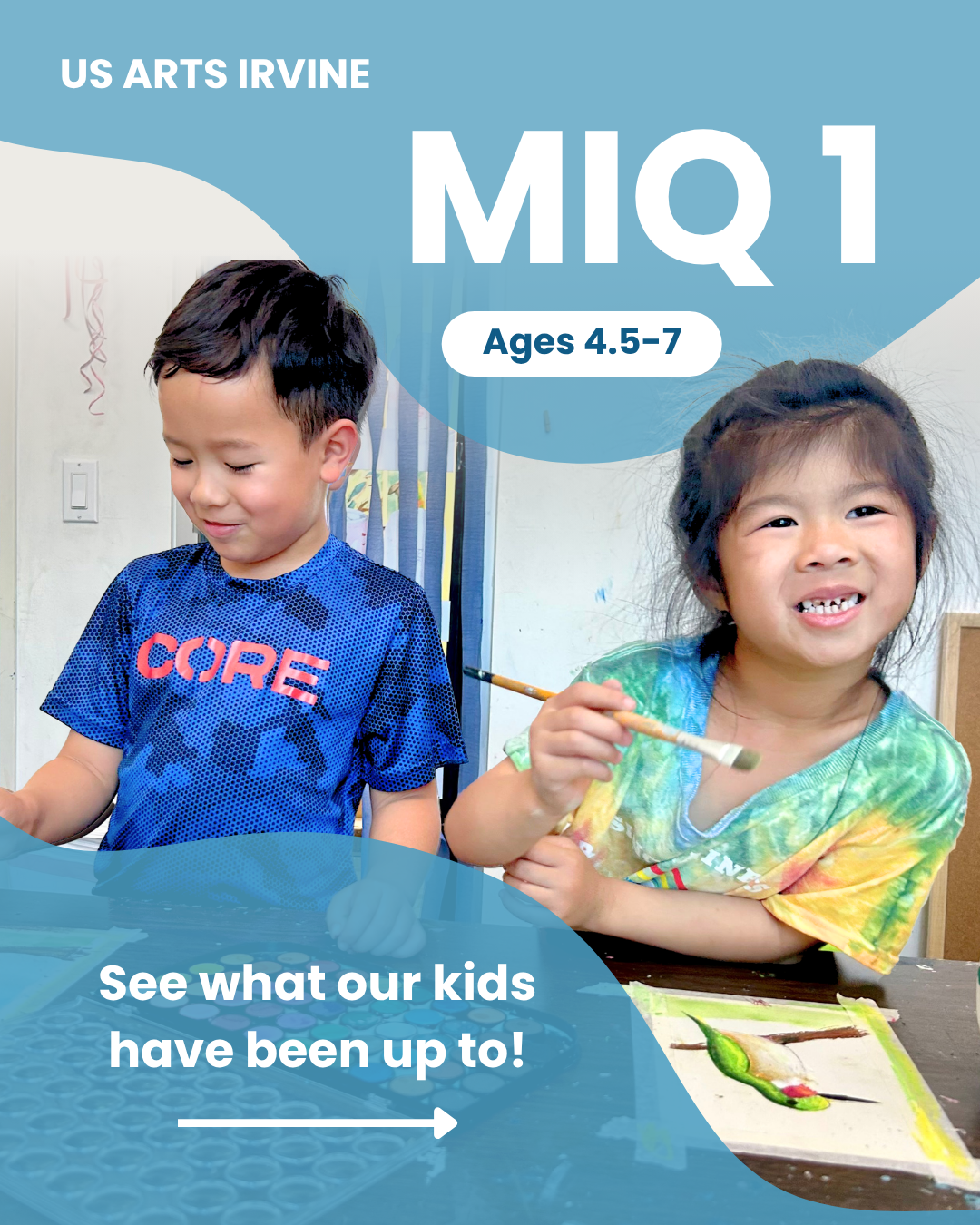
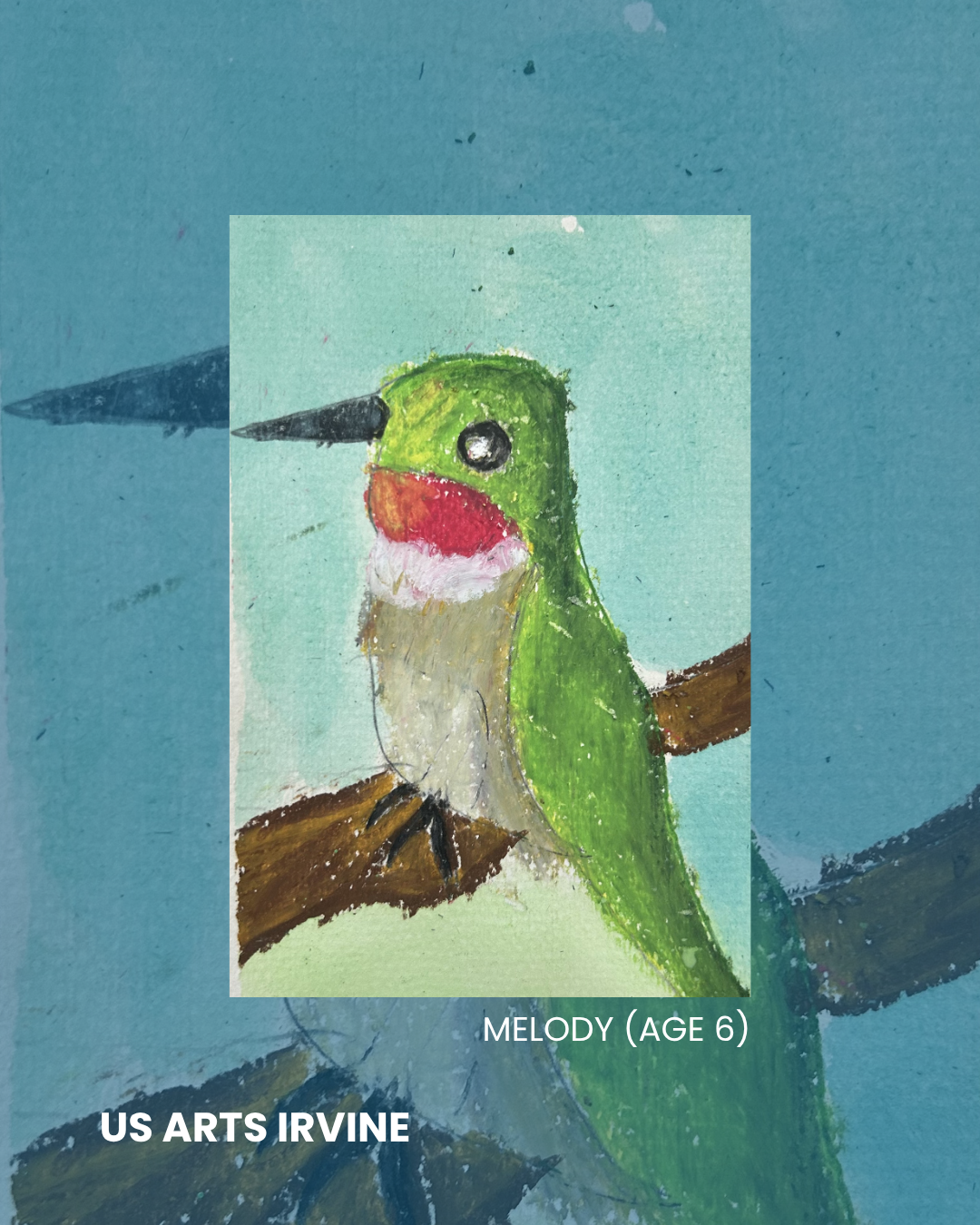

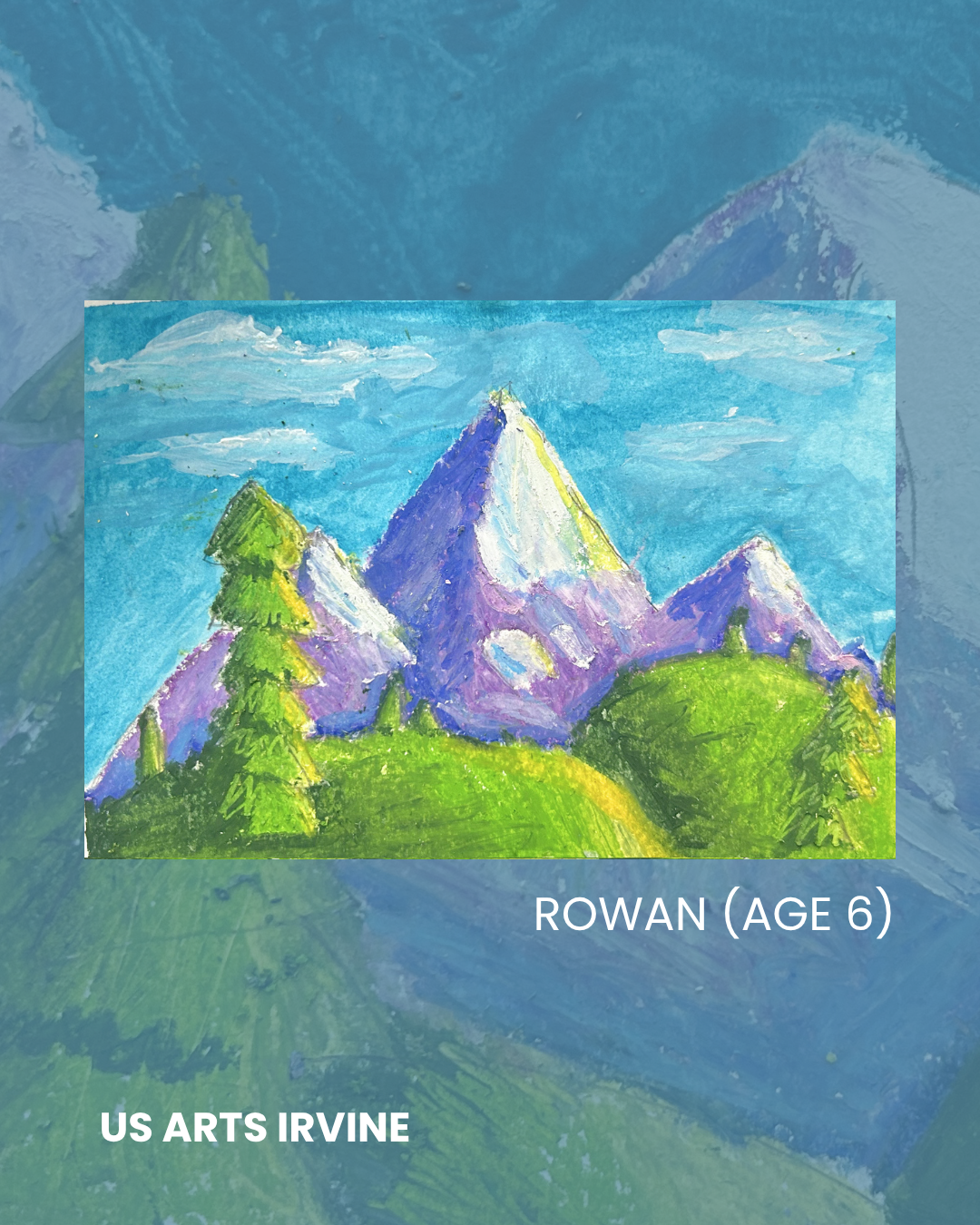

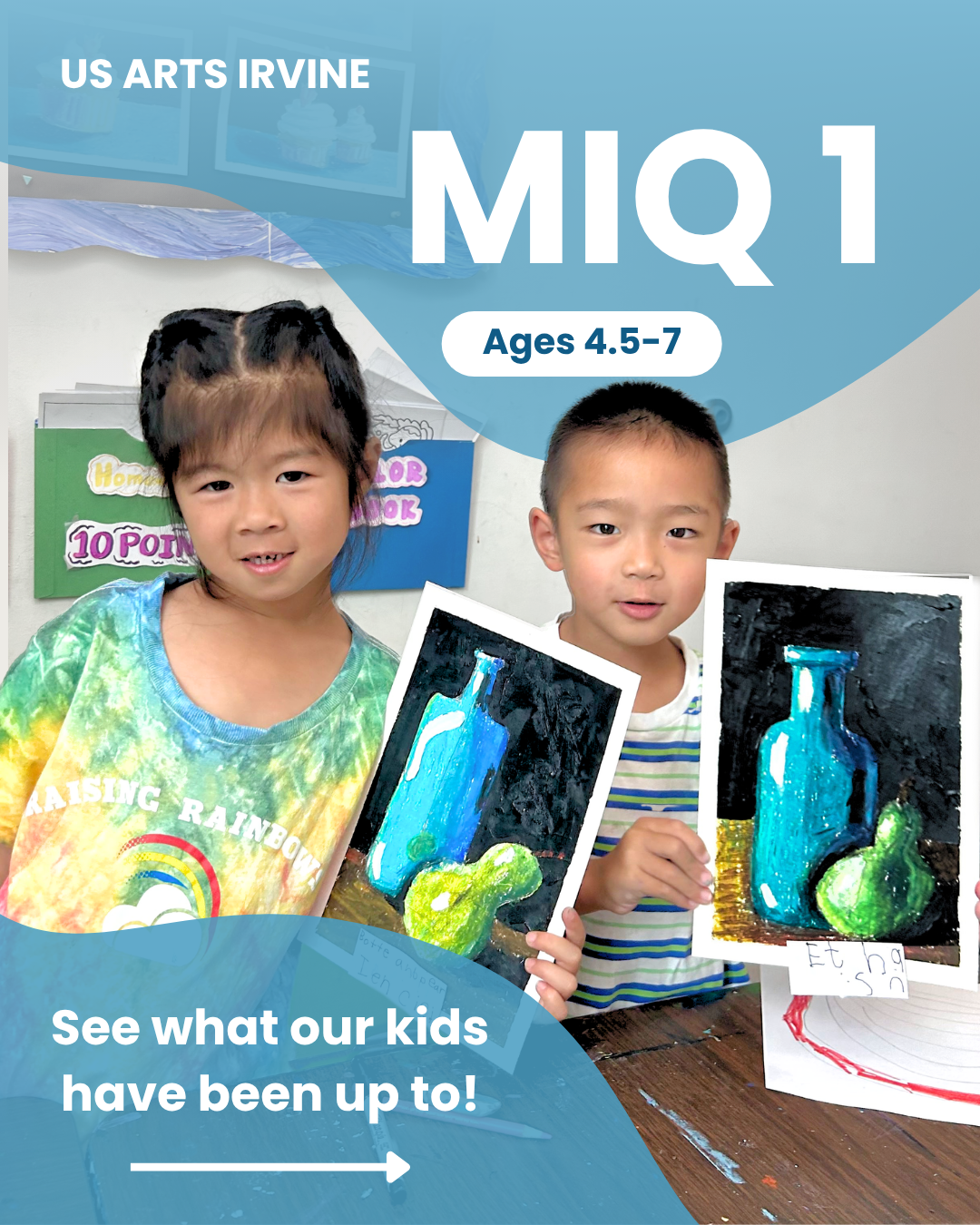
Weekly Instagram Project Post Template
Marketing Posters Used to Promote MIQ 1 Class
Results
Enrollment Growth
Daily enrollment rates increased by over 20 times during the early transition period, reflecting a rapid shift in demand once the new system was implemented
~21.7x higher daily enrollment rate (~2,067% increase)
+114% increase in enrollment efficiency
Like for Like Performance Gains
Jan 11: +100%
Jan 18: +50%
Feb 1: +33%
Sustained Retention
Maintained full classes across multiple consecutive weeks, indicating not just growth but consistency
Program Recovery
Transformed classes that had dropped to as few as 3 students per day into a stable, high demand entry program
Conversion Improvement
Trial students began converting at significantly higher rates due to improved in-class experience and student satisfaction
Parent Satisfaction
Increased positive feedback, stronger engagement during pickup, and higher perceived value of student work

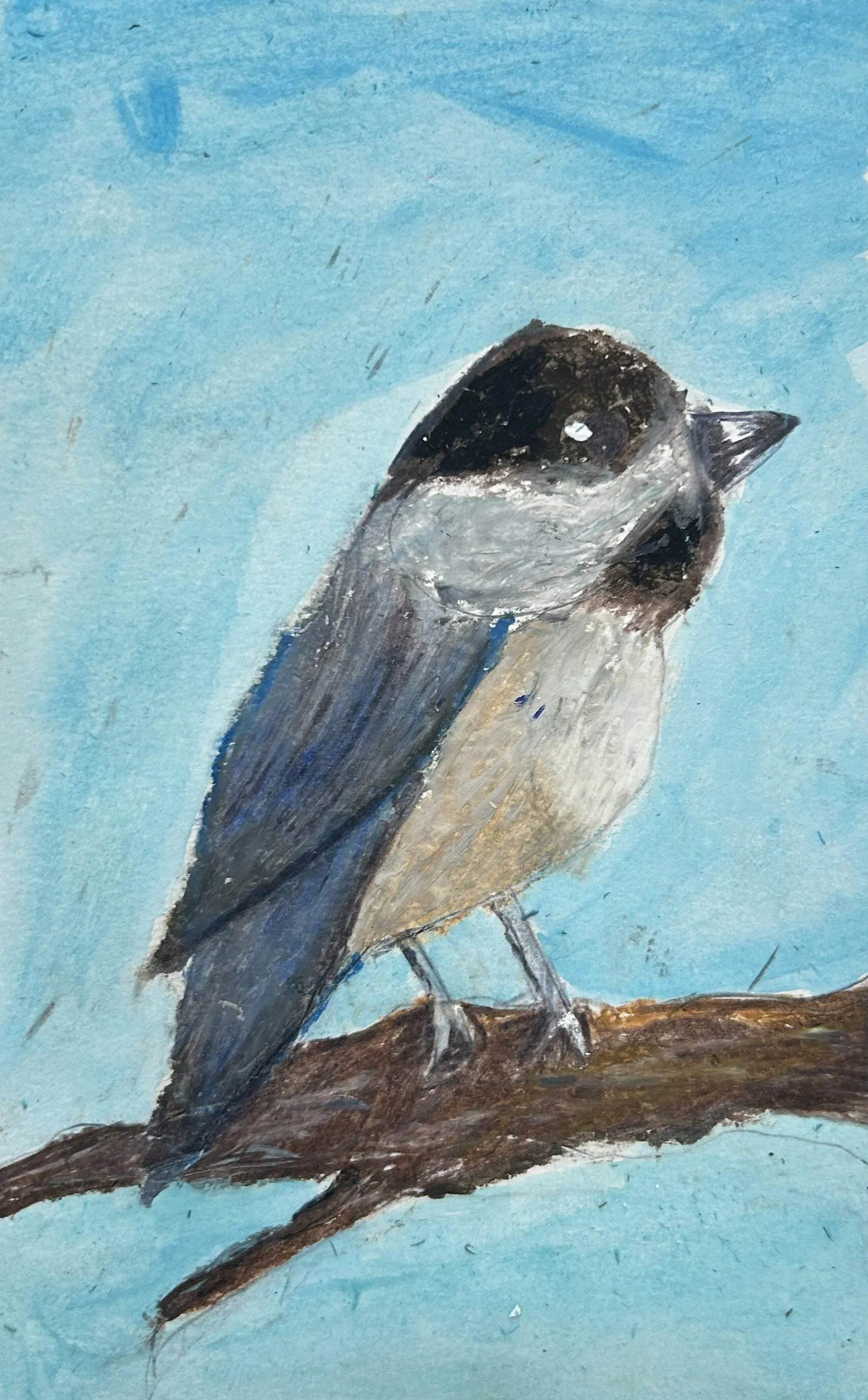
Henry (age 7)
Yonina (age 7)
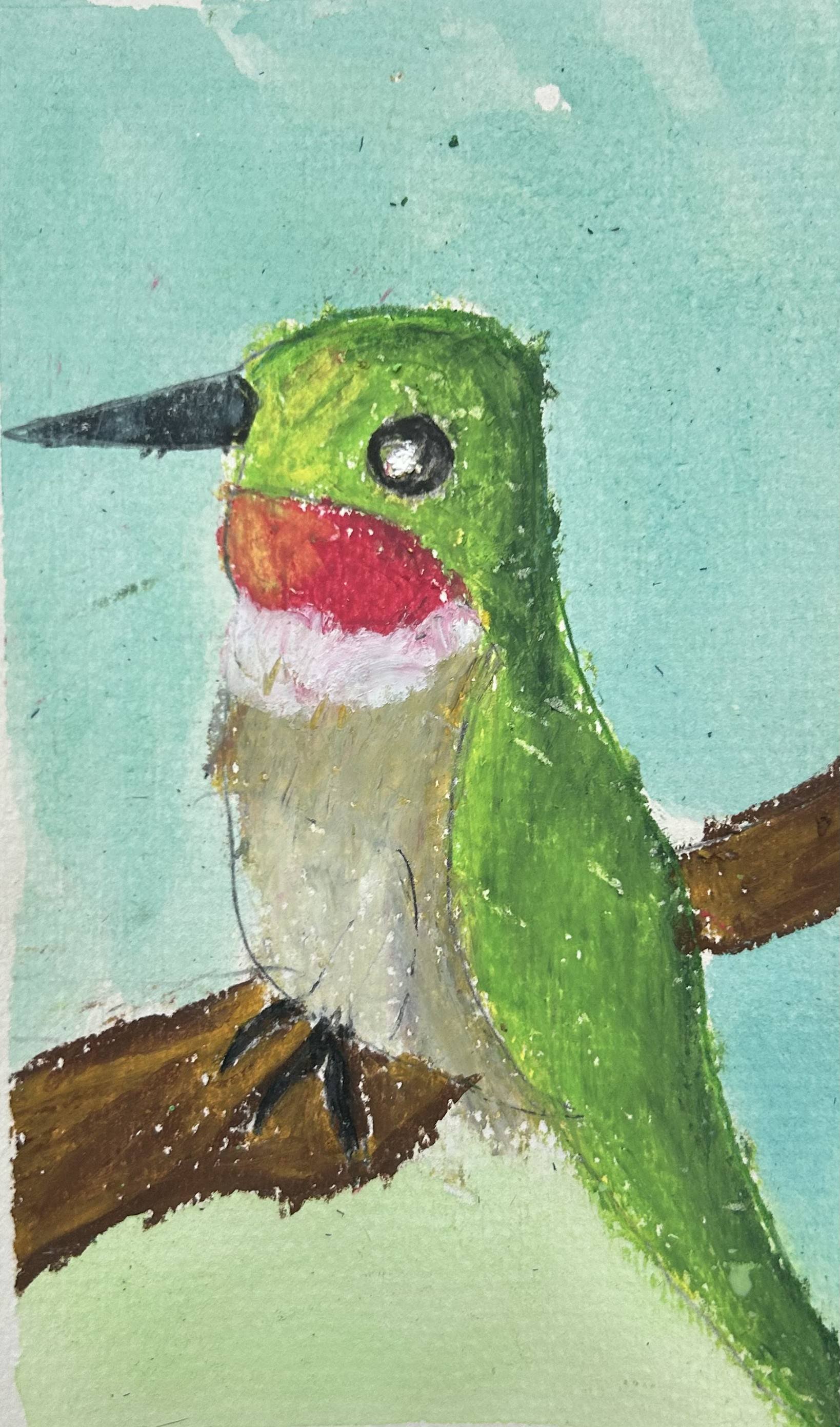

Melody (age 6)
Hailey (age 6)
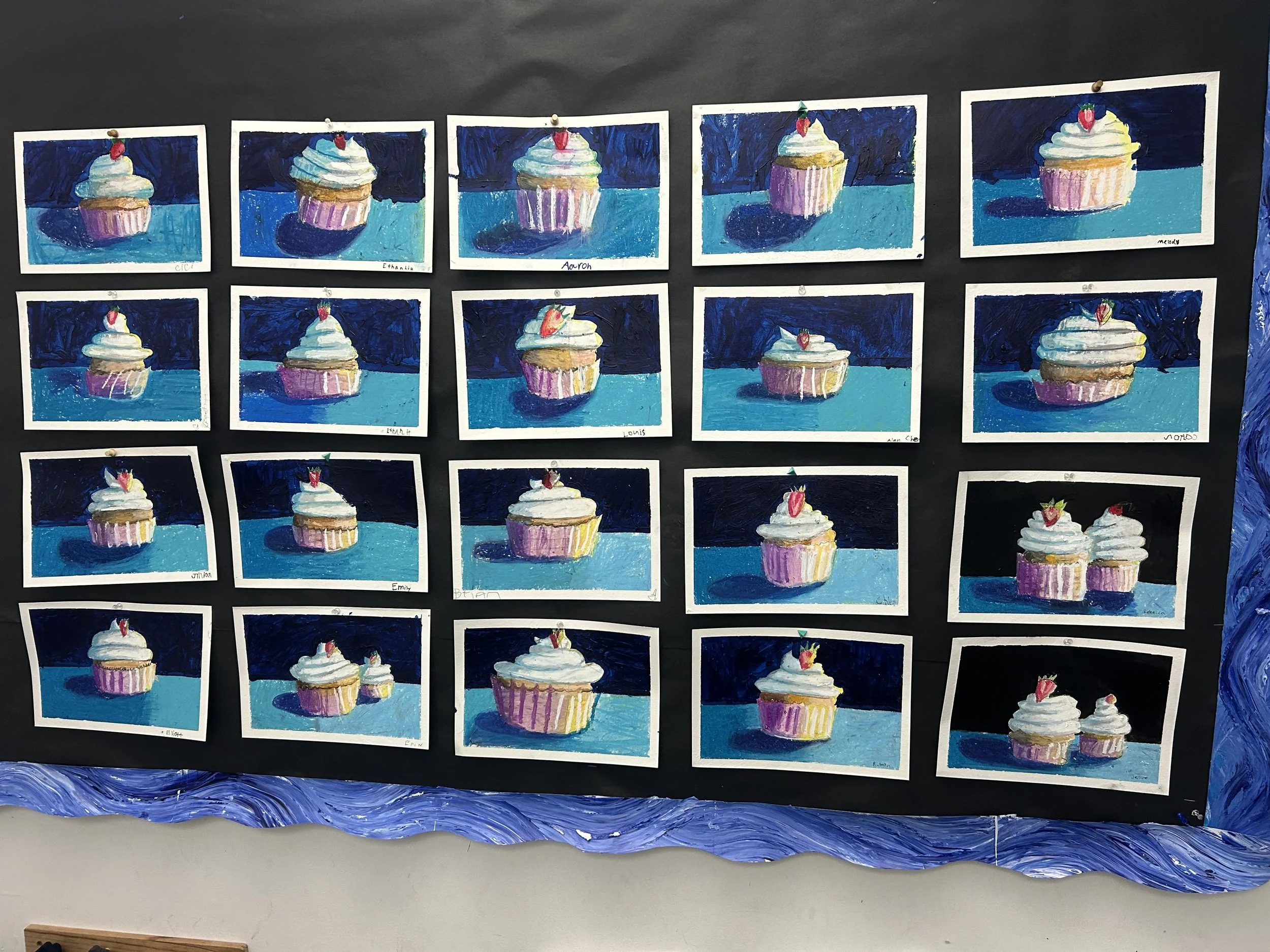
Cupcake Project Display (ages 4-7)
Strategic Outcome
This was not just a classroom improvement. It was a full system redesign that aligned environment, curriculum, and marketing into one cohesive experience.
Marketing brought families in, but the classroom experience is what made them stay. By addressing both sides, we were able to rebuild trust, increase demand, and create a sustainable growth model for the program.
MIQ 1 is now positioned as a strong entry point that feeds into higher level classes, strengthening the long term structure of the academy.
Personal Takeaway
I didn’t just step into a teaching role. I identified the core problems, rebuilt the system from the ground up, and worked cross functionally to scale a program that was previously underperforming.
This experience shaped how I think about creative work. It is not just about making something look better. It is about designing systems that change how people feel, engage, and ultimately decide to stay.